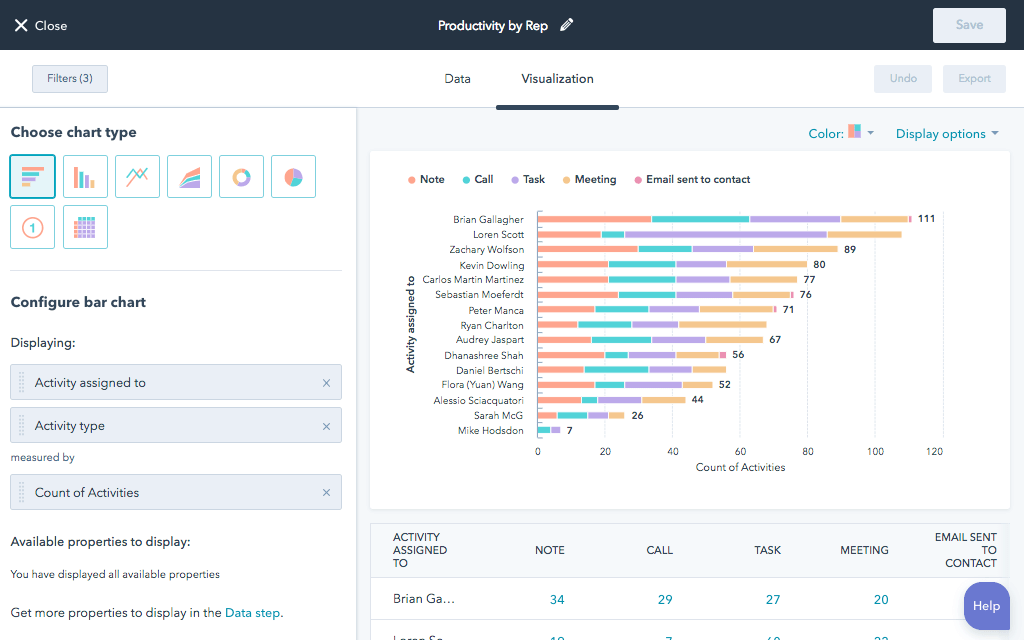
Reporting Features in CRM and Their Analytical Value are essential components that empower businesses to harness data effectively. In today’s fast-paced world, organizations rely on sophisticated CRM systems to track customer interactions, analyze trends, and ultimately drive decision-making. This exploration delves into the different types of reporting features available in CRM platforms, highlighting their analytical significance and the invaluable insights they provide for strategic planning.
From understanding customer behaviors to forecasting sales performance, the analytical capabilities embedded in CRM systems transform raw data into actionable intelligence. These features not only enhance operational efficiency but also enable companies to tailor their marketing strategies, improve customer relationships, and foster growth. By leveraging the power of reporting in CRM, businesses can achieve a competitive advantage in their respective markets.
Welcome to the world of artificial intelligence (AI), where technology is transforming our lives in ways we could hardly have imagined just a few decades ago. In this article, we will delve into the fascinating realm of AI, exploring its history, development, applications, and future prospects. Our aim is to provide you with a comprehensive understanding of this dynamic field, while keeping the tone casual yet formal enough to maintain clarity and respect for the subject matter.### The Evolution of Artificial IntelligenceAI is not a new concept; its roots can be traced back to ancient myths and stories about artificial beings endowed with intelligence.
However, the scientific pursuit of AI began in earnest in the mid-20th century. In 1956, the Dartmouth Conference marked a significant milestone in AI history, as it brought together some of the brightest minds in the field to discuss the potential of “thinking machines.” Researchers like John McCarthy, Marvin Minsky, and Herbert Simon laid the groundwork for AI, sparking interest and innovation that would shape the next several decades.Throughout the 1960s and 1970s, researchers focused on developing algorithms and programming languages specifically for AI.
Key breakthroughs included the development of the first neural networks and expert systems that could mimic human decision-making in specialized domains. Despite these advancements, the field faced challenges, often referred to as “AI winters,” where progress slowed due to limited computational power and overly ambitious expectations.### The Rise of Machine LearningThe real game-changer in AI came with the advent of machine learning in the 1980s and 1990s.
Unlike traditional AI, which relied on hard-coded rules, machine learning allowed systems to learn from data. This shift enabled the development of algorithms that could improve their performance over time without being explicitly programmed. One of the most influential breakthroughs was the introduction of support vector machines and decision trees, which laid the foundation for supervised learning.As the internet began to flourish in the late 1990s and early 2000s, the explosion of data provided the fuel for machine learning algorithms.
Researchers started leveraging vast amounts of information to train models, leading to rapid advancements in natural language processing, image recognition, and predictive analytics. This period witnessed the emergence of AI applications in various industries, from finance to healthcare, revolutionizing how businesses operate.### Deep Learning: A New FrontierThe introduction of deep learning in the 2010s marked a significant leap forward in AI capabilities.
Deep learning employs artificial neural networks with multiple layers, allowing machines to learn hierarchical representations of data. This approach has proven particularly effective in tasks such as speech recognition, image classification, and even playing complex games like Go and chess.One of the most notable successes of deep learning was the development of systems like Google’s AlphaGo, which defeated the world champion Go player in 2016.
This achievement captured the attention of the public and demonstrated the potential of AI to tackle complex problems that were once thought to be the exclusive domain of humans.### AI in Everyday LifeToday, AI is deeply woven into the fabric of our daily lives, often in ways we may not even realize. From virtual assistants like Siri and Alexa to recommendation systems on platforms like Netflix and Amazon, AI is enhancing our experiences and making tasks more convenient.
Smart home devices utilize AI to learn user preferences, optimizing energy usage and improving comfort.In healthcare, AI is transforming diagnostics and treatment plans. Machine learning algorithms analyze medical images, identifying conditions like tumors with remarkable accuracy. Additionally, AI-powered chatbots are providing patients with immediate assistance, streamlining the healthcare process and enhancing patient engagement.The automotive industry has also embraced AI, particularly with the advent of self-driving cars.
Companies like Tesla, Waymo, and Uber are investing heavily in AI technologies to create vehicles that can navigate complex environments autonomously. This innovation promises to reduce accidents, ease traffic congestion, and revolutionize transportation.### Ethical Considerations and ChallengesAs AI continues to evolve, it brings with it a host of ethical considerations and challenges. One of the primary concerns is bias in AI algorithms.
Since these systems learn from historical data, they can inadvertently perpetuate existing biases present in the training data. This has significant implications, particularly in areas like hiring, law enforcement, and lending, where biased decisions can lead to systemic discrimination.Privacy is another critical issue. The collection of vast amounts of personal data is essential for training AI models, but it raises concerns about how that data is used and protected.
Striking a balance between innovation and privacy rights is a challenge that policymakers and technologists must navigate.Additionally, there is the question of job displacement due to automation. While AI has the potential to create new job opportunities, it also poses a threat to jobs that can be easily automated. Societies must prepare for this shift by investing in education and reskilling programs to ensure that the workforce can adapt to the changing landscape.### The Future of AILooking ahead, the future of AI is both exciting and uncertain.
As advancements continue, we can expect AI to play an even more significant role in shaping industries, economies, and daily life. Areas such as explainable AI, which aims to make AI decisions more transparent, are gaining traction to address ethical concerns.Moreover, the integration of AI with other emerging technologies, such as quantum computing and the Internet of Things (IoT), holds the potential for even greater breakthroughs.
For instance, AI-driven insights from IoT devices could lead to smarter cities, enhanced resource management, and improved quality of life.In conclusion, artificial intelligence is a rapidly evolving field that has already had a profound impact on our world. From its humble beginnings to its current applications and future potential, AI continues to shape our lives in ways we are only beginning to understand.
As we move forward, it is essential to address the ethical challenges and ensure that AI serves as a positive force for humanity. With thoughtful consideration and responsible development, the possibilities for AI are virtually limitless.
Query Resolution: Reporting Features In CRM And Their Analytical Value
What are the key benefits of CRM reporting features?
CRM reporting features provide insights into customer behavior, sales trends, and performance metrics, enabling informed decision-making and strategic planning.
How do CRM reporting features enhance customer relationships?
They help businesses understand customer needs and preferences, allowing for personalized communication and improved service delivery.
Can CRM reporting features be customized?
Yes, most CRM systems offer customizable reporting tools that allow users to tailor reports according to specific business requirements.
Are CRM reports real-time?
Many CRM systems provide real-time reporting capabilities, ensuring that businesses have access to the latest data for timely decision-making.
What types of reports can be generated in CRM?
Common reports include sales performance, customer segmentation, lead tracking, and campaign effectiveness, among others.